Register
Made methods
Questions it asks
Applying: tools and methods that help others see and shape the meaning their work carries themselves.
Surfacing: making a particular environment legible to the people operating within it.
Stage
Active
Years
Ongoing
Place
Semiozic OÜ (client engagements)
Role
Service designer & consultant
The encounter
The design before the method
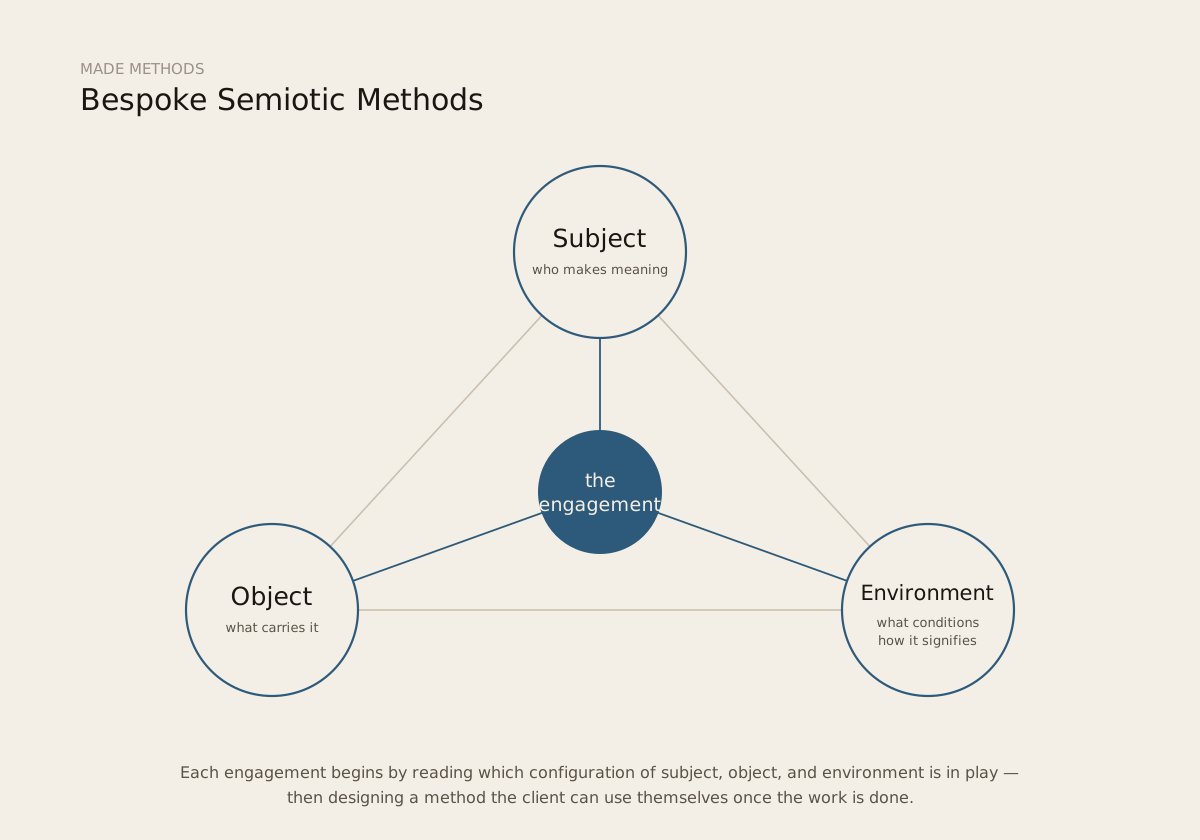
A semiotic toolbox is only useful in proportion to how well it has been shaped for the situation it has to read. A generic method cannot do justice to the specific meaning-making inside a particular brand, a particular city, a particular built environment, or a particular community of users. The service-design work delivered through Semiozic OÜ is the design that comes before any method is deployed: reading which configuration of subject, object, and environment is in play in a given engagement, then building the diagnostic that lets the client read that configuration on their own once the engagement is over.
What is being made
Modelling ongoing semiosis
A practice of diagnostic method design for semiotic consulting engagements. The focus is the process itself: using semiotic theory to model the dynamics of ongoing semiosis inside a real situation, then designing a method the client can keep. The modelling is ad hoc, shaped to each engagement rather than applied from a template, and it is structured around three coordinates the diagnostic has to examine:
- Subject(s). The person, group, or organisation doing the meaning-making. The reading goes beyond a conventional target-user map: it distinguishes the potential subject (who could be reached if the engagement opens correctly) from the actual subject (who is reached today, on the conditions the present environment makes available). Both are modelled; the gap between them is often where the most useful findings sit.
- Object(s). The artefact, product, sign, or signal that carries the meaning at stake: a brand and its expressions; the technological artefacts inhabiting a home; a city’s signage and flows. The object is what the method has to be able to read.
- Environment(s). The surrounding context that conditions how the object signifies for the subject. Environments vary by sector and by scale. The specialism here is living spaces and the technologies within them; the modelling generalises to brand semiospheres, organisational cultures, urban-planning sites, and ecological contexts that include non-human meaning-making.
The deliverable from any engagement is a diagnostic tailored to that subject-object-environment configuration: a designed instrument the client can run themselves once the engagement closes. The point is not to leave a report; it is to leave the capacity to read the meaning the work is making.
What it shows
Bespoke method, portable modelling
The work shows that semiotic theory, properly modelled, is operative for industry rather than only for the academy. What changes between engagements is the diagnostic; what stays constant is the modelling discipline underneath it, the practice of reading ongoing semiosis across subject, object, and environment. The method is bespoke; the modelling is portable. That is the de-sign claim the practice tests, one engagement at a time.
It also positions the consulting work alongside, rather than beneath, the designed products. The Semiotic Operating Systems are two specific systems that have emerged from this practice; this entry describes the practice itself, which can produce further diagnostics for environments not yet engaged.
Developed and delivered through Semiozic OÜ (Tallinn, Estonia)
Service areas: brand identity, cultural-code analysis, cultural market entry, product and packaging design, user perception modelling, cultural-identity audits, organisational-value alignment, urban planning including non-human semiosis
Background informing the practice: semiotics of de-sign, subject-object-environment relations, and the inhabitation of techno-living spaces (doctoral research, University of Tartu)
A walkthrough of the diagnostic-method design process is available on request; the underlying apparatus is proprietary to Semiozic OÜ
Semiozic OÜ · Tallinn, Estonia